Work / Questt — Morrie AI Tutor
Questt — Morrie AI Tutor
Designing an AI tutoring experience to help students understand progress and preparedness.
Problem
Students struggled to understand their learning progress and readiness for exams. Existing tutoring tools didn't provide clear, actionable insights into their strengths and gaps.
Client
Questt
Role
Product Designer
Industry
Education Technology
Type
Mobile & Web Platform
Scope
UX Design, UI Design, User Research, AI Integration, Data Visualization
Context
Questt is an AI-powered learning platform that helps students prepare for exams. The Morrie AI tutor feature was designed to provide personalized tutoring and progress insights. The challenge was making AI-generated insights feel trustworthy and actionable for students. Students needed to understand not just their performance, but what to do about it. Constraints included: - Young student audience (middle and high school) - Need for clear, non-technical language - AI model limitations requiring clear fallbacks - Mobile-first usage patterns
My role
I led the design of the Morrie AI tutor experience. My responsibilities included: - User research with students to understand how they think about progress and readiness - Design of conversational AI tutor interface - Design of progress visualization and insights - Creation of actionable recommendation flows - Collaboration with AI engineers on model outputs and conversational design I worked closely with product managers, AI/ML team, and frontend engineers.
Approach
I researched how students currently tracked their learning progress and what insights they found most helpful. Many students had trouble connecting practice performance to actual exam readiness. Key decisions: - Use conversational format for AI tutor, making it feel approachable - Design progress visualizations that show both performance and readiness - Provide specific, actionable recommendations rather than generic advice - Make AI explanations clear and non-intimidating I prioritized making complex insights feel simple and actionable.
Key solutions
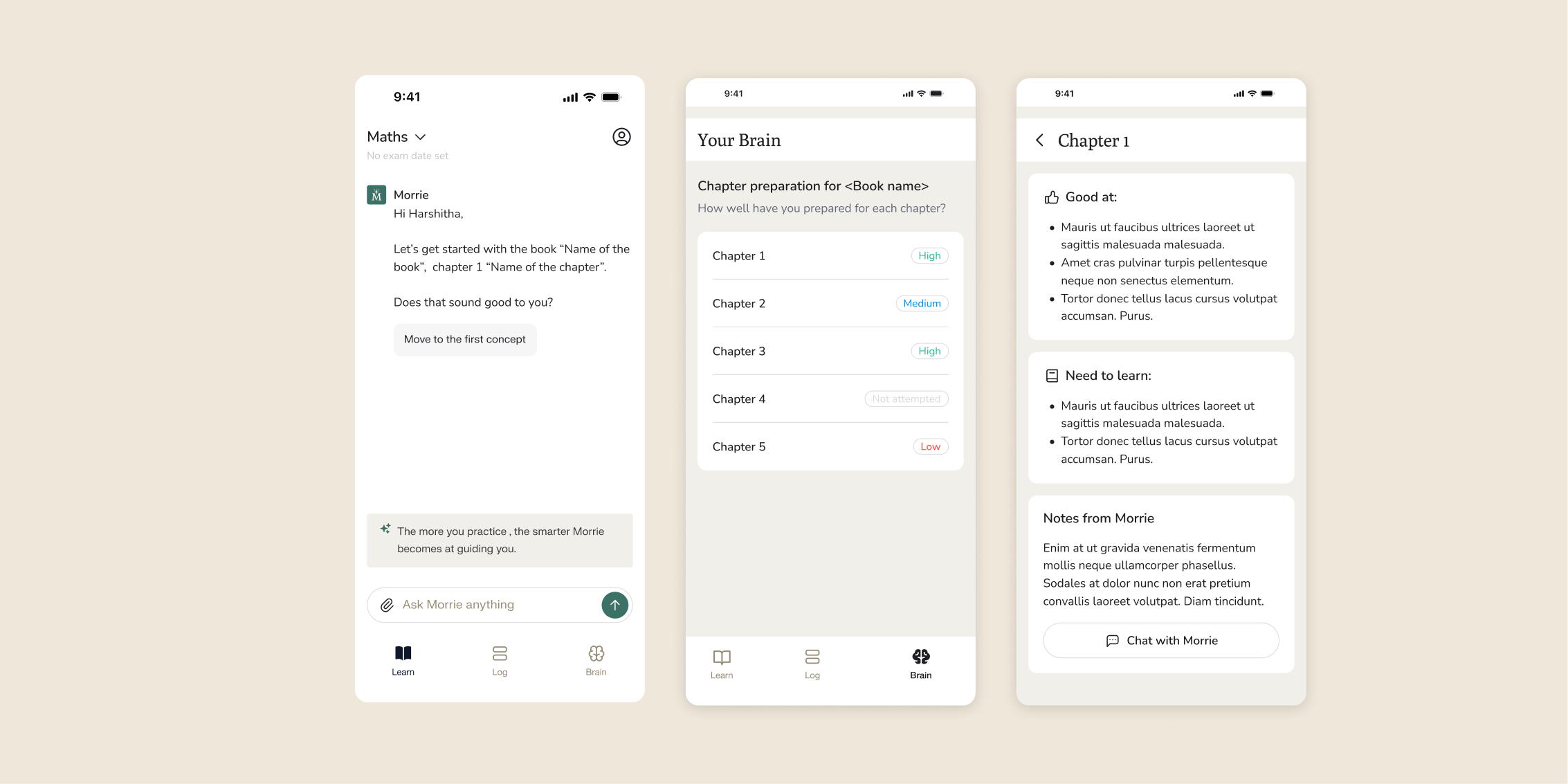
Conversational progress check-ins
I designed a conversational interface where the AI tutor (Morrie) asks students about their learning goals and provides personalized insights. The conversation format made progress feel less like data and more like a helpful dialogue.
Readiness visualization
I created visual representations of exam readiness that combined performance data, practice completion, and confidence levels. The visualization used clear language like "Ready," "Getting there," or "Needs work" rather than abstract metrics.
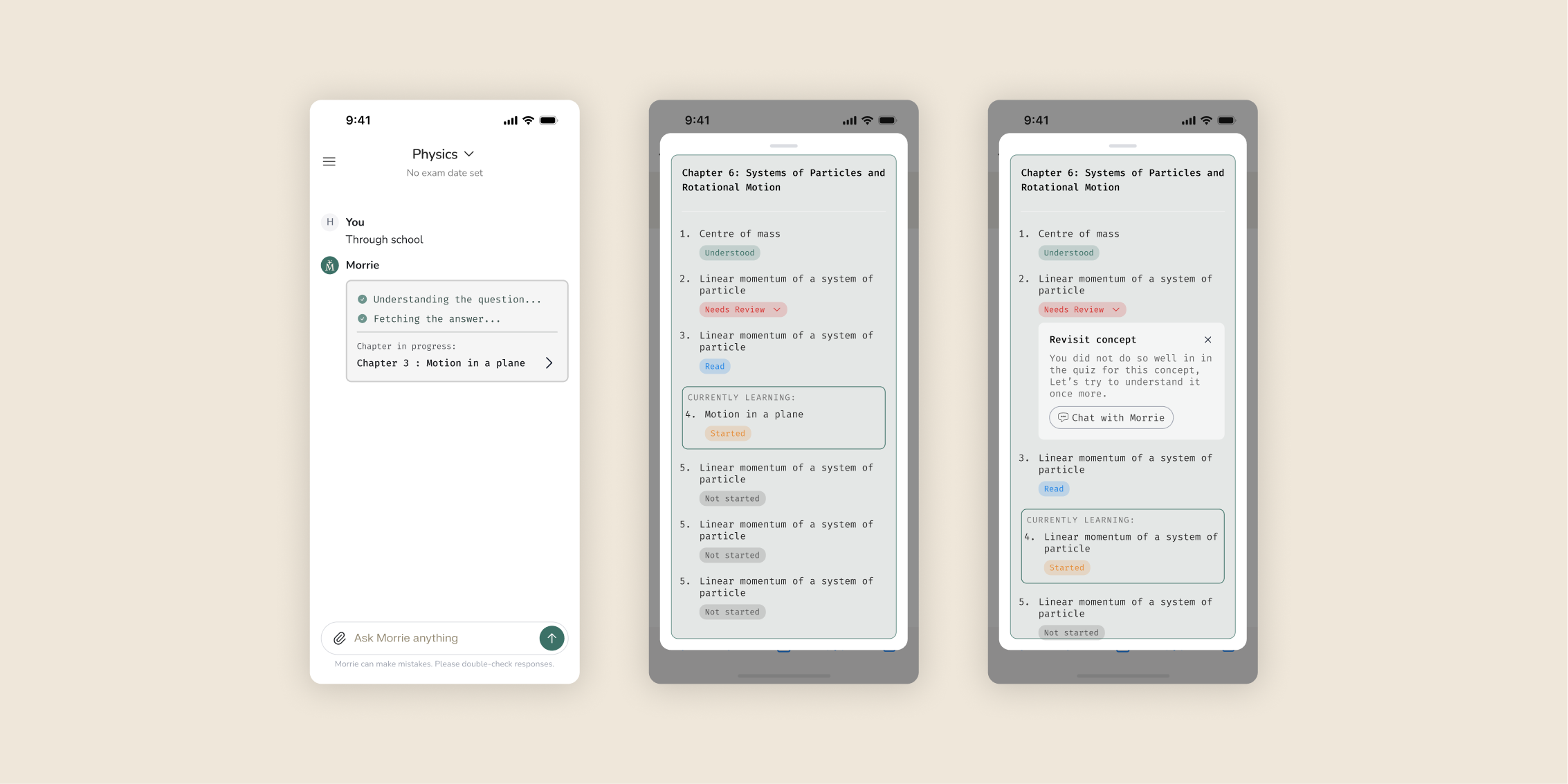
Personalized study recommendations
Based on progress data, the AI tutor provided specific recommendations (e.g., "Focus on algebra problems—you've missed 3 in a row"). These recommendations linked directly to practice content, making them actionable.
Impact
Students who used the Morrie AI tutor showed improved understanding of their learning progress. User testing indicated that students felt more confident about their exam preparedness when they could see clear, personalized insights. The conversational format made students more likely to engage with progress tracking regularly, rather than avoiding it when performance was low. Students particularly appreciated the specific recommendations that linked directly to study content, making it easy to act on insights.
What I learned
This project taught me how to make AI feel approachable and trustworthy, especially for younger users. The conversational format helped students feel like they had a supportive tutor rather than being judged by data. I learned that progress visualizations work best when they're simple, actionable, and use familiar language. Students responded much better to "Ready" or "Needs work" than to complex charts or percentages. The recommendation system was crucial—showing progress without clear next steps led to anxiety rather than motivation. I'd explore more conversational recommendation formats in future iterations.